


Officine Panerai
In our digital age, when mechanical watch brands depend on nostalgia to one degree or another, marketing departments have become quite adept at storytelling. They lean heavily on some connection to a heroic individual, or to a historic event, or to an organisation with a storied past, in a bid to attain that magical quality: authenticity. Any watch enthusiast who’s been around for more than five minutes knows that when it comes to authenticity, Panerai simply cannot be outdone.
The company established its credentials during the first half of the twentieth century through a long and fruitful collaboration with the Italian Navy, in which Rolex played a crucial part. A dormant period that began in the early 1970s ended in 1993, when the company entered the civilian market for the first time. A 1997 acquisition by the Richemont Group enabled Panerai to pour generous resources into R&D, the fruits of which now include an expanded product line, exotic materials and in-house movements.
More than any other maker’s, Panera’s stout, audacious, art-deco-like design evokes an alternate, steam-propelled universe, one with no digital device in sight. Combine that with the compelling backstory and it’s easy to see why the brand inspires the kind of loyalty that competitors can only dream of.
If you’ve ever wondered what the fuss is about, this brief historical overview will provide some clues.
Florentine Beginnings
Giovanni Panerai founded his namesake company in Florence in 1860. In addition to supplying Swiss watches, cases, movements and parts, it offered repair services and watchmaking instruction. As the nineteenth century drew to a close, the company transitioned into an R&D operation. It became known as a reliable designer and producer of hardware and precision instruments.
The Naval Connection
Panerai became a veritable Italian institution under the direction of Giovanni’s grandson Guido, who began supplying the Regia Marina with hardware such as submersible navigation tools and mine triggers. As the twentieth century progressed, Panerai’s innovations in luminescence would make it an indispensable partner to the Italian Navy, which was then in the process of expanding its nighttime and underwater capabilities. Panerai’s proprietary compound Radiomir — developed during WWI and made up of zinc sulphide, radium bromide and mesothorium — would be used to illuminate a number of maritime instruments.
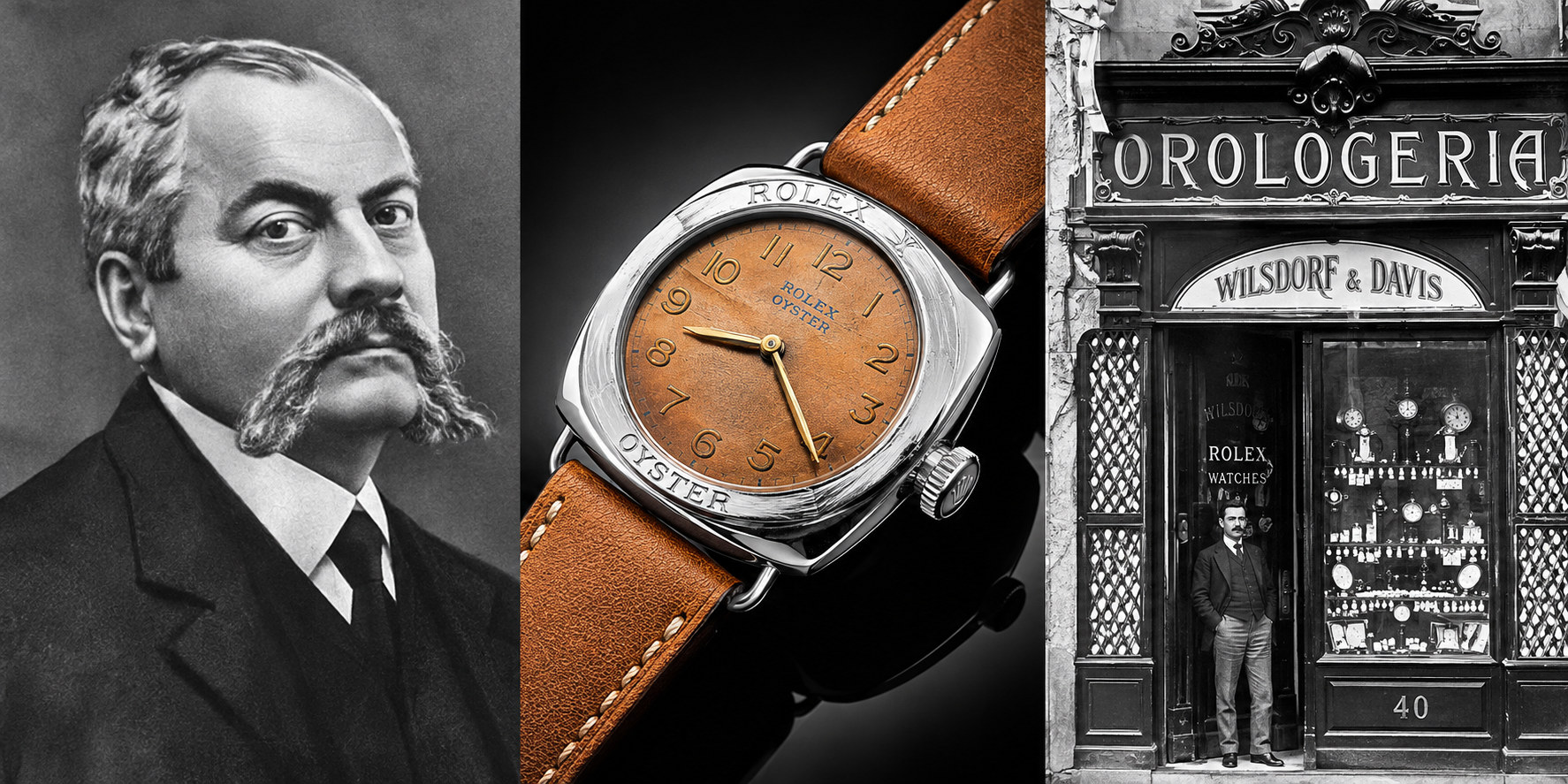
In the interwar period Panerai made an horological leap, propelled by two fresh innovations: the Davis Submerged Escape Apparatus and Rolex’s Oyster case. The former was an early example of an oxygen rebreather that was quickly adopted by combat swimmers. It enabled the creation of underwater commando units, or frogmen, who soon found themselves in need of a water resistant, luminous timekeeping device. Rolex’s Oyster case would be one of the main ingredients of that recipe; Panerai’s Radiomir would be the other.
Between the 1930s and the 1950s Panerai supplied the Regia Marina with Rolex-assembled Oyster-cased watches, modified to meet the needs of the end user. A landmark reference was the 3646, which Panerai equipped with soldered-on wire lugs, a waxed leather strap, an enlarged bezel, a shatter-resistant Plexiglass crystal and the so-called sandwich dial: a dark black layer with cut-out hour markers stacked on top of a luminescent layer, its high contrast resulting in high legibility.
Throughout the period, Panerai continued to refine its tool-watch template. Tritium became the basis of a safer luminescent material dubbed Luminor. Integrated lugs replaced the soldered-on wire lugs. The vulnerability of Rolex’s screw-down crown was addressed by a cage-like crown-locking mechanism, patented in 1956 and destined to become iconic after Panerai’s civilian debut four decades later.
After 1956, the wartime horological steam ran out. The Rolex partnership ended and Panerai rechannelled resources into its other high-tech operations. When Giuseppe Panerai, great grandson of founder Giovanni, died in 1972, it appeared as if watchmaking could become a footnote in the company’s history.
Millennial Rebirth
The hibernation came to an end in 1993. Drawing heavily on its heritage, the company introduced its first civilian models under the name Officine Panerai.
Rather than water down its design in order to gain mainstream acceptance, Panerai decided to emphasise its military ties with a stark design language. The Luminor ref. 5218-201A (not to be confused with the luminescent material) became a post-comeback icon: OP logo on the lower half of the dial, large Arabic numerals at 3,6,9 and 12, Tritium-treated, non-matching hour markers and hands, 44 mm diameter, 316L polished stainless-steel case, sapphire crystal, cushion-shaped case, the distinctive crown protector and a depth rating of 300 m; there is no way to mistake this watch for any other.
In the years that followed, Panerai kept mining its own archives for inspiration and made a specialty of historically-inspired releases. But it is far from an ‘homage’ brand. Its manufacturing facility in Neuchâtel, Switzerland has been developing hand-wound and automatic calibres and other components since the early 2000s, with different kinds of finish, complication and power-reserve capabilities.
Its ultra-dedicated fan base sets the company apart as much as its steampunk-like design. Much of the buzz around new releases is fan-generated rather than ad-driven. Indeed, during the early post-comeback years it was the unsolicited endorsement of a Hollywood star that brought the company global attention and fuelled its ascent — a tale that deserves its own blog post.